Video
Available with Premium subscription
Get PremiumSIRSASANA
Inverted Asanas
Description
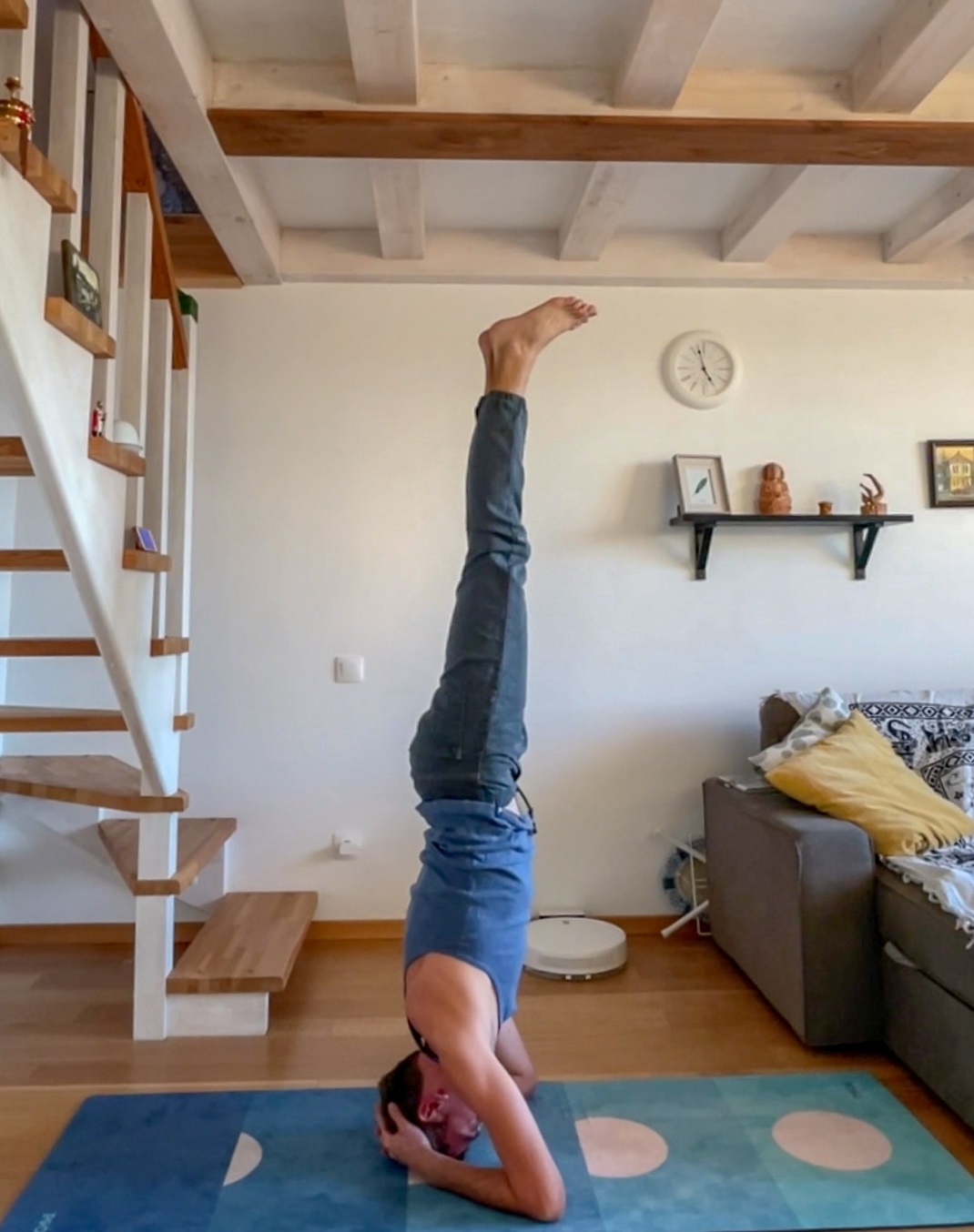
SIRSASANA Asana group: inverted poses Translation of the name from Sanskrit: • sirsha — head. 1. Setup Starting position: Vajrasana. Interlace the fingers and lower the hands onto the mat. The angle between the arms is 60°. Lower the head to the floor between the hands (the contact point with the floor may vary from the crown of the head to the start of the forehead in different schools). Walk the feet closer to the body until the back straightens. Transfer the weight into the arms and smoothly lift the feet off the floor. Bend the knees, draw the heels toward the pelvis, straighten the back, then raise the legs up. Press the hands into the floor and move the shoulder blades up. Work actively with the shoulders to reduce the load on the neck. The back is straight, the whole body is extended as in Tadasana. Balance in the center of the triangle formed by the arms. 2. Simplified and advanced variations Simplified variations: • one leg raised up, the other on the floor; • back straight, heels close to the pelvis, do not raise the legs higher; • Sirsasana near a wall; • on ropes or other equipment that prevents load on the neck. Advanced variations: • Sirsasana with different leg positions (Padmasana, Samakonasana, Garudasana, etc.); • Sirsasana 2 — the palms and the head create three points of support (not recommended for holding long due to the strong load on the neck). 3. Safety CONTRAINDICATIONS: 1) Uncompensated neck injuries, protrusions and hernias; 2) Elevated intracranial, intraocular and arterial pressure; 3) Glaucoma, retinal detachment; 4) Overactive thyroid gland; 5) A history of micro-strokes; 6) Menstruation. 7) Work with the arms to reduce pressure on the head and neck. 8) After coming out of the pose do a counter-pose: stay in a horizontal position (child's pose) for 30–40 seconds.