Video
Available with Premium subscription
Get PremiumCHATURANGA DANDASANA
Strength Asanas
Description
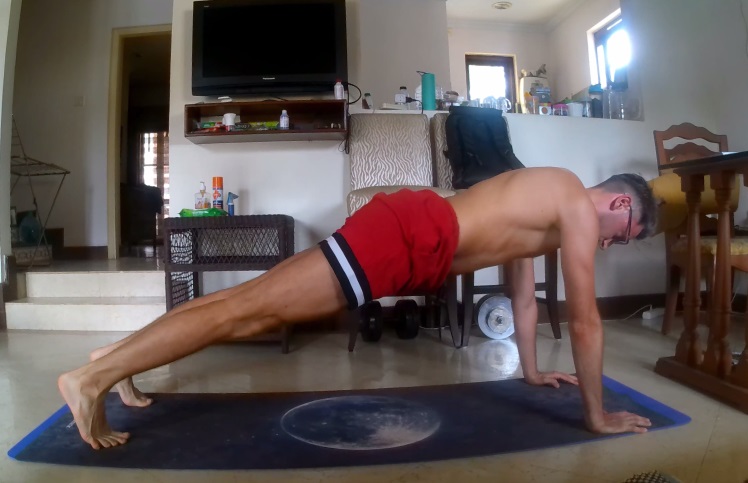
CHATURANGA DANDASANA Asana group: strength poses Translation of the name from Sanskrit: • urdhva — raised upward; • chaturanga — four-limbed, consisting of four parts (chatur — four, anga — limb/part); • danda — staff (a symbol of a straight line and support). 1. Setup Starting position: come to all fours (Marjariasana), placing the palms strictly under the shoulder joints and the knees under the pelvis. Straightening the legs: alternately extend the legs back, placing the feet on the toes (hip-width apart). Body line: stretch the whole body from the heels to the crown of the head into one straight line. Do not let the pelvis sag down or rise up. Tuck the tailbone slightly toward you and round the lower back. Arms: press the palms firmly into the mat, especially the bases of the index and big toes. Push the floor away from you, rounding the space between the shoulder blades (an active shoulder girdle). Engaging the core: tuck the tailbone slightly in (aim it toward the heels), draw the lower belly in and engage the abdominal and gluteal muscles. Final hold: press the heels back and the crown of the head forward, stretching the spine. Keep the gaze at the floor slightly ahead of the palms so that the neck stays long. 2. Simplified and advanced variations Simplified variations: • lower one or both knees to the floor. Advanced variations: • lift one leg off the floor; • one arm along the body; • Nakrasana (jumps from Chaturanga Dandasana forward and back). 3. Safety • The wrists may become overloaded — use the simplified variations. • Compensate the wrists after coming out of the pose. If the palms are placed farther or closer than the shoulder joints, a dangerous kink occurs in the wrist joint. Distribute the weight over the whole palm, pressing the fingers firmly to the floor, and do not transfer the load only onto the bases of the palms. If you have wrist pain, perform the pose with support on the forearms. Lower-back arch: a relaxed belly leads to the pelvis sagging down. This creates excessive compression in the lumbar spine. Constantly pull the navel toward the spine and keep the buttocks toned. "Sinking" in the shoulders: if you relax the upper back, the shoulder blades come together and the neck gets compressed by the shoulders. This overloads the shoulder joints and the neck. Actively push the floor with the arms, spreading the shoulder blades apart. Neck kink: looking forward hyperextends the neck and disrupts blood flow. Keep the gaze strictly on the floor between the palms, keeping the neck a continuation of the straight line of the spine.