Video
Available with Premium subscription
Get PremiumKASHYAPASANA
Strength Asanas
Description
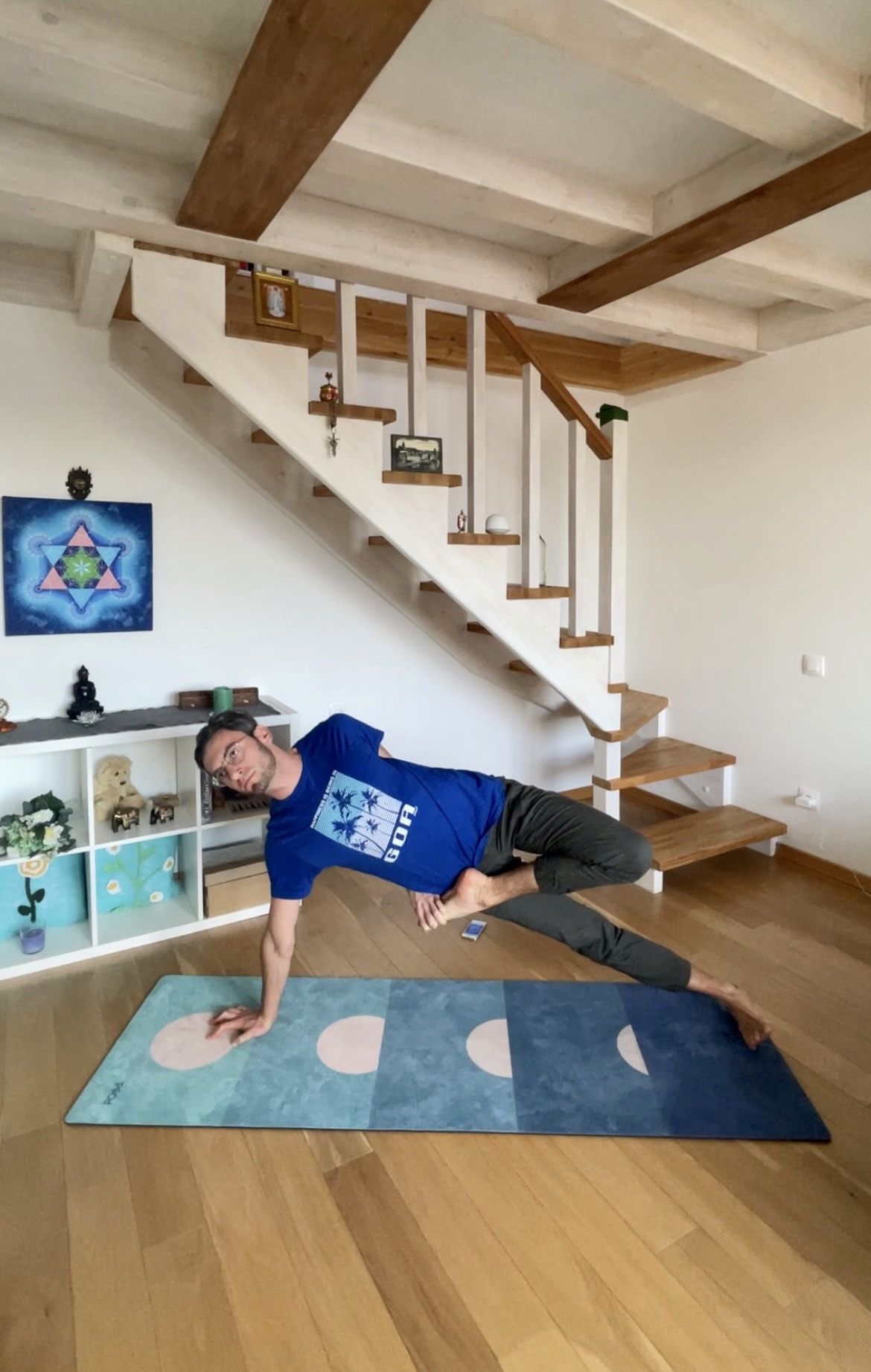
KASHYAPASANA Asana group: standing poses, balances, forward bends Translation of the name from Sanskrit: • Kashyapa — the name of a divine sage, author of Indian volumes of the Rigveda. 1. Setup Starting position: Tadasana. Lower the torso forward, place the palms on the floor by the feet and step the legs back about one and a half meters to take Chaturanga Dandasana — the Plank pose. Turn the whole body to the right and balance on the right hand and right foot. The outer side of the right foot must stand firmly on the floor. Place the left foot on the right and the left palm on the left thigh. Balance with the body held straight. Bend the left leg and place the left foot on the base of the right thigh as in half Padmasana. Swing the left arm from the shoulder behind the back and grasp the big toe of the left foot with the left hand. Hold the balance. The whole chest and the extended right arm should be on one line. 2. Simplified and advanced variations Simplified variations: • the left leg is not in half Padmasana but rests against the right thigh, with the left hand on the hip; Advanced variations: • close the eyes. 3. Safety A traumatic pose. Perform the pose only after mastering Padmasana well. Hold it for no more than 30 seconds and do not tip the body forward. • The wrists and the knee can be injured; after performing the pose it is necessary to do a counter-pose for the wrists. • Knees: with insufficient rotation in the hip joints, twisting occurs in the knee joints. If discomfort appears, use the simplified variations. • Do not kink or compress the neck; move the shoulders away from the ears.